2026-10-13 ·
Why Does Your Dryer Take Too Long to Dry Clothes?
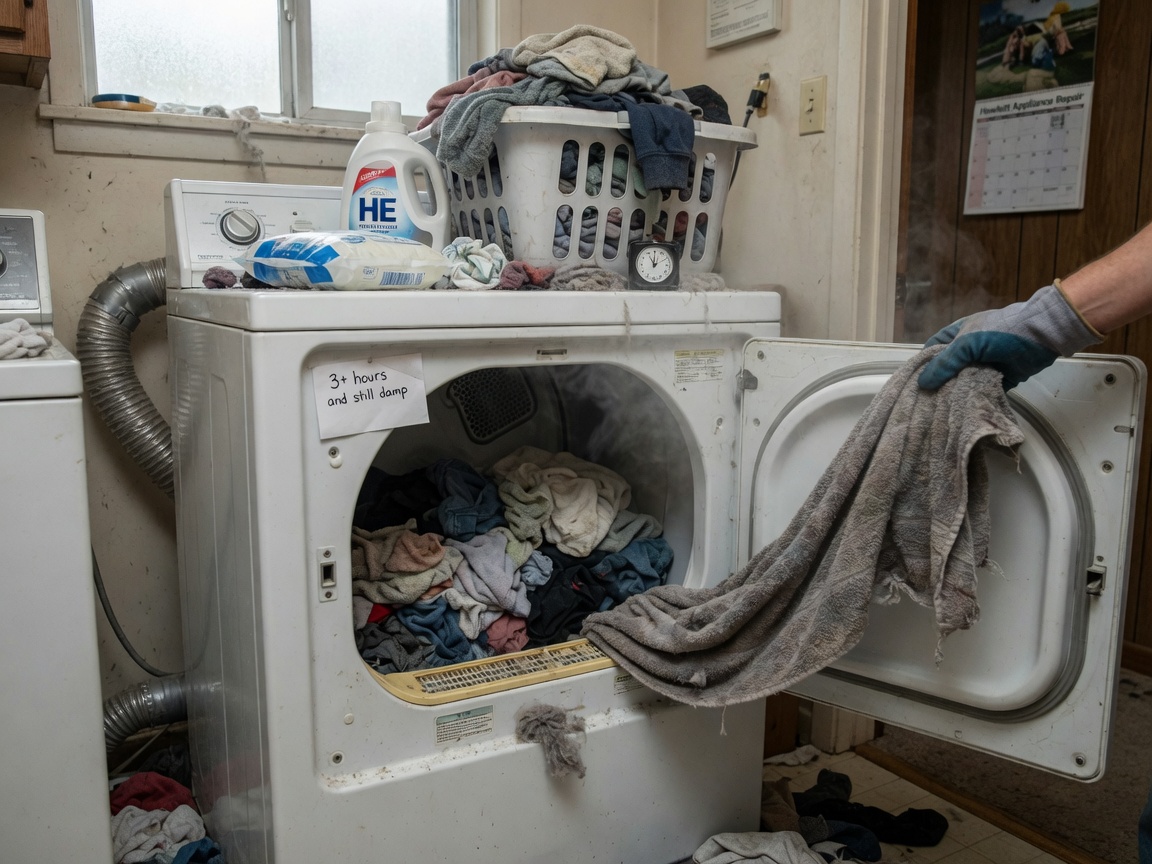
A standard cotton load should finish in roughly 45–60 minutes on a normal cycle, and most dryers should be done within 75 minutes even with a heavy load. If yours is running 90 minutes or more and clothes still feel damp, the cause is usually airflow. The dryer has to move a large volume of hot, moist air out of the drum every minute, and anything that slows that exit path makes the drying time stretch out. The heating element and the motor are rarely the first suspects.
Lint Buildup in the Vent Line
The most common culprit is lint that has passed the screen and settled inside the flexible transition duct or the rigid metal vent running out of the house. The lint screen catches only the coarse fibers. Fine lint slips past it, collects on the duct walls, and gradually narrows the passage. A vent that is partly blocked can make a dryer feel like it is working while it is really just recirculating heat. Look at the exterior vent flap while the dryer runs. If it opens only weakly, or nothing blows out, the line needs cleaning.
Duct length and bends matter too. Every 90-degree elbow adds resistance, and long runs reduce airflow considerably. Many manufacturers set a maximum total length, often around 25 feet with a few elbows subtracted, so a vent that wanders through a basement or crawlspace may be undersized for the machine. Shortening the run or switching to smooth rigid metal ducting often helps more than any cycle adjustment.
Why Hewlett Homes Make This Worse
Many houses in Hewlett, Hewlett Bay Park and the surrounding Nassau County neighborhoods were built decades ago, and laundry was frequently placed in a basement or a back corner with a long vent run. Those older layouts often have the dryer far from the exterior wall, with several turns along the way. Add a few years of normal use and the duct accumulates lint faster than anyone expects.
The local climate adds a second layer. Summers here are hot and humid, so damp towels and bedding carry more water into the drum, and the dryer has more moisture to push out. Winter brings cold snaps and the occasional nor'easter, when outdoor vent flaps can freeze partly shut or get pinned by wind-driven snow and debris. A dryer that seemed fine in July can slow down noticeably by February. Checking the exterior hood during bad weather is a quick way to rule out an outside blockage.
Overloaded Drums and Moisture Sensors
Sometimes the machine is working correctly and the load is the problem. Stuffing a drum prevents tumbling, so the hot air cannot reach the wet fabric in the middle. Heavy items like bath towels, comforters and jeans absorb a great deal of water, and a single large comforter can double the drying time of an otherwise normal load. Split large loads, and add a dry towel or two to help the others move around.
Modern dryers use moisture sensors instead of a fixed timer. The sensor is a pair of metal strips inside the drum. When they are coated with fabric softener residue, dryer sheet film, or a mineral film from hard water, the machine can read the load as still wet and run far longer than necessary. Wiping the strips with a cloth dampened with white vinegar every few months usually restores normal behavior. If the drum seems to run forever on an auto-dry setting, the sensor is worth a look.
Heating Element and Thermostat Failures
If airflow is clear and the load is reasonable, the heat source is the next thing to examine. Electric dryers use a heating element controlled by a thermostat and high-limit thermostat. When one element burns out, the dryer may still tumble and blow air but produce only lukewarm heat, so clothes take far longer to dry. Gas dryers have a burner and igniter that can fail or deliver weaker flame, with similar results. A rough estimate for a replacement element is $80–$200 in parts and labor, though prices vary by model.
Thermostats can also fail in the open position, meaning the dryer stops heating early or never reaches temperature. Because these parts interact with safety cutoffs, testing them requires care. A thermal fuse that has blown will often stop the dryer entirely, so a machine that runs but never heats should be inspected before anyone assumes the motor is at fault.
When to Call a Technician
Start with the free checks: clean the lint screen before and after every load, vacuum the lint trap housing, disconnect the vent and clear it, and confirm the exterior flap opens freely. If drying time drops noticeably after that, you have solved the problem. If not, or if the dryer is hot to the touch, smells of burning, or shuts off mid-cycle, stop using it and call a professional. Overheating dryers are a real fire risk, and lint is highly flammable.
A technician can measure airflow, test the thermostats and element with a meter, and inspect the vent path with a camera or rod. Repair costs for a clogged or damaged duct generally run less than a new machine, while a full dryer replacement can cost $500–$1,200 depending on type and features. Most dryers last roughly 10–13 years with reasonable care, so an older unit with a major failure may be better replaced. If you need help, dryer repair and dryer vent cleaning cover the two most common fixes, and our Hewlett service page explains how we work in the area. KLS Co. is based at 1800 Rockaway Ave, Hewlett, NY 11557, and takes calls 24/7. For more on keeping machines running longer, see how to extend the lifespan of your household appliances.