2026-10-13 ·
What Causes a Dishwasher to Leave Dishes Dirty?
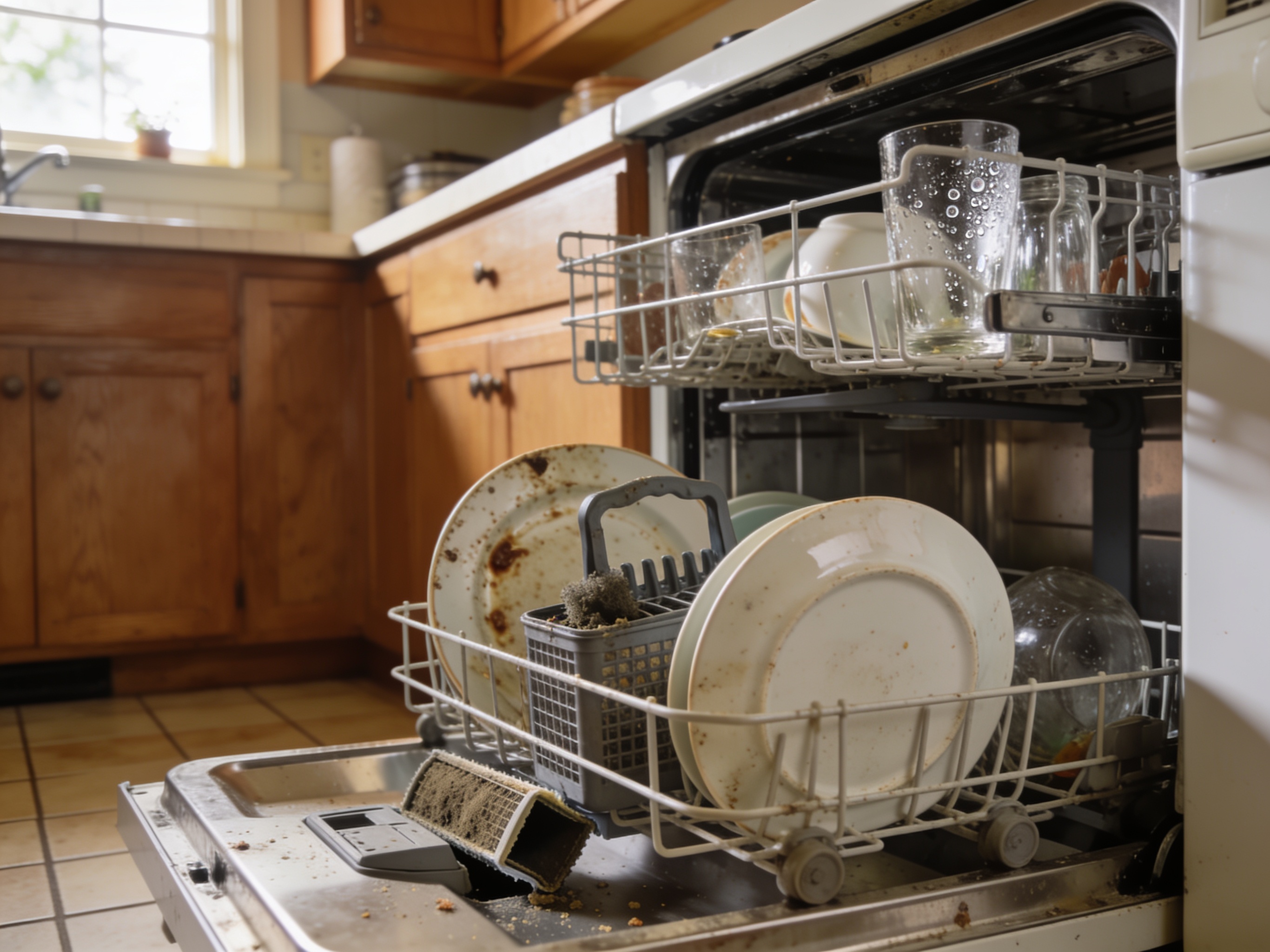
A dishwasher leaves dishes dirty most often because it cannot move enough hot water across the load, or because the water it sprays is carrying debris and mineral buildup that it cannot wash away. In most homes we service around Hewlett, the fix is inexpensive, often $0–$150 for a filter, spray arm, or detergent change, and rarely requires replacing the unit. Repairs for a failed heating element, drain pump, or control board typically run $150–$450 depending on parts and labor.
Clogged Filters and Spray Arms
The most common culprit is the filter at the bottom of the tub. Food particles collect there with every cycle, and once the mesh is blocked, water recirculates over the same dirty film instead of rinsing it away. Most manufacturers recommend cleaning the filter about once a month, and homes with heavy use or no garbage disposal need it more often. Pull the filter, rinse it under warm water with a soft brush, and check the coarse and fine screens separately, since both can trap debris.
The spray arms are the next place to look. The small holes along each arm can clog with bits of seed, pasta, or mineral crust, which leaves the upper rack under-sprayed and the lower rack streaked. Unscrew the arm, flush each hole with a toothpick, and spin it to confirm it moves freely. A spray arm that does not rotate usually has a worn bearing or a stone lodged in its hub, and it should be replaced rather than forced.
Hard Water and Mineral Buildup
Homes across Nassau County, including those in Hewlett, Hewlett Bay Park, Woodmere, and Lynbrook, often draw water that carries a noticeable mineral load. Calcium and magnesium deposits leave a cloudy film on glassware, white crust on the interior walls, and a gritty residue on dishes that looks like the wash never happened. Older houses in these neighborhoods that still have original supply lines can add rust flakes to the mix as well.
The fix starts with the detergent and a rinse aid, then addresses the water itself. Use a dishwasher-safe cleaning agent or citric acid cycle about once a month to dissolve buildup on the heating element and walls. If you have a softener, confirm the salt level and regeneration schedule, because an empty brine tank will show up as spotting within a few loads.
Water Temperature and Heating Problems
A dishwasher relies on water near 120–140°F to dissolve grease and activate detergent. If the incoming water is cold, or the heating element has failed, the cycle runs but the dishes come out greasy and smeared. Many homes in the area have long hot-water runs from the tank to the kitchen, so the unit may receive lukewarm water even when the faucet feels hot. Running the hot tap for a minute before starting the dishwasher often helps.
To check the element, listen for the heater during the drying phase and look for a visible cracked or blistered coil. A failed element typically costs $150–$300 to replace, including the part and a technician visit. Because the element sits in the same tub as the wash water, a failed one can also leave a film that mimics other faults, so confirm the heater works before blaming the detergent.
Loading Mistakes and Water Flow
Overloading is an underrated cause of dirty dishes. Large pots, cutting boards, or a stack of plates placed in front of the spray arm can block the jets that reach the back of the tub. Bowls should face downward at a slight angle, and tall items belong along the outer edges where the spray is strongest. Leaving space between dishes lets water reach every surface.
Water flow can also be restricted by a kinked or clogged drain hose, a closed inlet valve, or a float assembly stuck in the down position. If the tub holds water at the end of a cycle or fills slowly, the issue is usually mechanical rather than cosmetic. Check the inlet valve screen for sediment, which is more common in older homes where supply lines pick up debris over the years.
When to Call a Professional
Call for service when the basics are clean and the results still disappoint. Signs include a drain pump that hums without draining, a control panel that cycles through codes, a door latch that does not seal, or a burning smell during the heat cycle. These point to parts that require testing and replacement, and attempting a fix without the right meter can turn a $200 repair into a larger bill.
KLS Co. is a locally owned appliance repair business based at 1800 Rockaway Ave in Hewlett, NY 11557, and we are available 24/7 for urgent dishwasher problems. If you are dealing with a leak, a flooded floor, or a unit that will not drain before a holiday, contact us through our dishwasher repair page. For broader guidance on keeping your kitchen appliances running longer, our article on how to extend the lifespan of your household appliances covers maintenance habits that prevent many of these problems. If your stove or oven is also acting up, our oven and stove repair team can diagnose it in the same visit.
A dirty-dish problem is rarely mysterious once you work through filters, spray arms, water quality, temperature, and loading. Start with the cheapest fixes, clean the filter monthly, and keep an eye on mineral buildup in a Hewlett home that runs on hard water. If the problem persists after those steps, the cause is almost always a component that needs testing, and that is the point to bring in a technician.